


Consciously Apolitical ! (Part-1)


The relationship between the soldier and the state forms the bedrock of national sovereignty. Across civilizations, the primary purpose of an armed force has been to shield a nation’s geography and core values from external and internal threats. However, Pakistan being the first Islamic Ideological State confronted with multiple internal and external threats hitting at the ideological base. Armed Forces took it upon themselves to simultaneously also protect the Ideological Frontiers of the State, which unfortunately more often than not, resulted in Military Takeovers. Nevertheless, while guarding the State with deeper sincerity filled with precious sweat and blood of Ghazi and shaheeds, ‘The Imperative of Political Neutrality in Uniform’ has never before been more critical. To achieve this, men in uniform must master a crucial paradox: they must remain unconsciously politically aware, while remaining consciously apolitical.

Understanding the political environment is essential for a soldier, to comprehend the geopolitical canvas, the nature of modern hybrid warfare, and the intent behind strategic commands. However, acting politically—taking sides, meddling in civil governance, or expressing factional bias—fractures military discipline and destroys public trust. As the adage warns, "A house divided against itself cannot stand." When a military shifts its gaze inward to the political arena, it inevitably neglects the horizon where external threats loom.
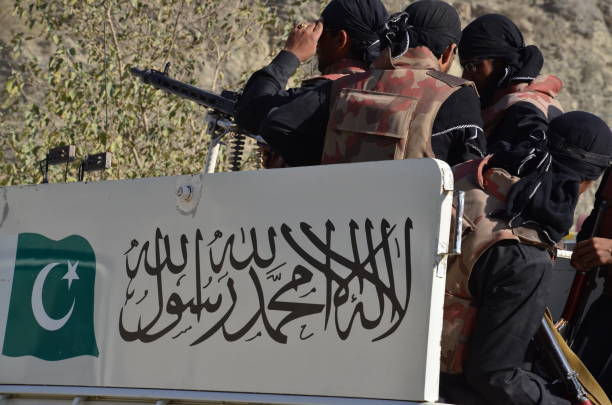
In order to understand the cost of political entanglement, history provides stark examples of militaries that lost their primary focus by overstepping into governance. The Roman Praetorian Guard: Originally established to protect the Roman commander, the Praetorian Guard quickly realized its leverage in civil politics. By assassinating emperors and auctioning off the throne to the highest bidder, they ushered in centuries of institutional corruption and political instability, ultimately hastening the collapse of the empire. The Ottoman Janissaries: Once an elite fighting unit, the Janissaries gradually embedded themselves into palace politics, military trade guilds, and policy-making. Their resistance to modernizing military reforms—driven by political self-preservation—led to severe battlefield failures and their eventual violent eradication during the ‘Auspicious Incident in 1826’. The French Military and the Dreyfus Affair: In late 19th-century France, political factionalism within the military leadership compromised justice, eroded public confidence, and distracted the armed forces during a delicate period between major European conflicts. Conversely, Prussian military theorist Carl von Clausewitz famously noted that "War is the continuation of politics by other means." And of course, Pakistan has a lot to learn by deeper analytical and unbiased study of her own history especially of 1958, 1968/69, 1970/71, which resulted in the greatest debacle of breakup of Pakistan. This formulation underscores that while military strategy serves political ends, the military instrument itself must remain subordinate to the state entity rather than becoming a partisan political actor. As the Latin phrase reminds us: Quis custodiet ipsos custodes? ("Who will watch the watchers?").

How to ‘Conceptualize Awareness versus Action?’. To safeguard a nation’s territorial integrity (its borders, airspace, and waters) and ideological boundaries (its founding philosophy, constitution, and core national identity), military officers destined to reach higher ranks, require a nuanced posture. First,’Unconscious Political Awareness’: An intuitive, professional grasp of global grand strategy, constitutional mandates, national interests, and socioeconomic vulnerabilities. This ensures commanders understand why they fight and how their operational tactical choices ripple across international diplomacy. And Second, ‘Conscious Apolitical Conduct’: At senior most command level, a deliberate, disciplined refusal to engage in partisan rivalries, political endorsements, civil administration, or ideological favoritism. It requires keeping the sword in its scabbard until summoned by legitimate constitutional authority. When soldiers step into the political arena, they risk becoming like "a sailor who abandons the wheel to argue over the ship's destination, while heading straight toward the reef."

In the given milieu, ‘What is Strategic Imperative for the Pakistan Armed Forces?’. For the Pakistan Armed Forces, maintaining this equilibrium is a matter of supreme national survival. Situated at a complex geopolitical crossroads—confronting conventional threats on its eastern border, asymmetric security challenges along its western frontier, and the ongoing threat of hybrid warfare—Pakistan requires a military whose professional focus is absolute and undivided, and above all with wholehearted public support. To preserve its role as the ultimate shield of the nation, the armed forces should consider three core tenets: ‘Strict Subordination to the Constitution’, ‘Professional Specialization Over Administrative Involvement’ and ‘Preserving National Cohesion’.
The military is one of the few national institutions that reflects the unity of Pakistan's diverse population. Remaining scrupulously apolitical ensures that every citizen—regardless of political, ethnic, or regional affiliation—views the soldier in uniform as an unbiased national protector. By internalizing political dynamics without participating in them, the Pakistan Armed Forces can ensure that their institutional focus remains fixed on guarding the nation's ideological and territorial borders and securing its sovereign future. The fire-spitting incumbent spokesperson’ tendency to tag political opponents as traitors, terrorists, and separatists needs to be harnessed and hate spreading monsters need to be leashed with ban on money making electronic media; they are all destroying public’s mental peace and tearing apart the fabric of national cohesion. The God gifted and adroitly used opportunities on the external fronts due to extraordinary regional security environment, must translate into geo-economic dividends for the people of Pakistan rather than mean political point scoring or playing as a pawn on the global chessboard. Pakistan Zindabad !


Comments